
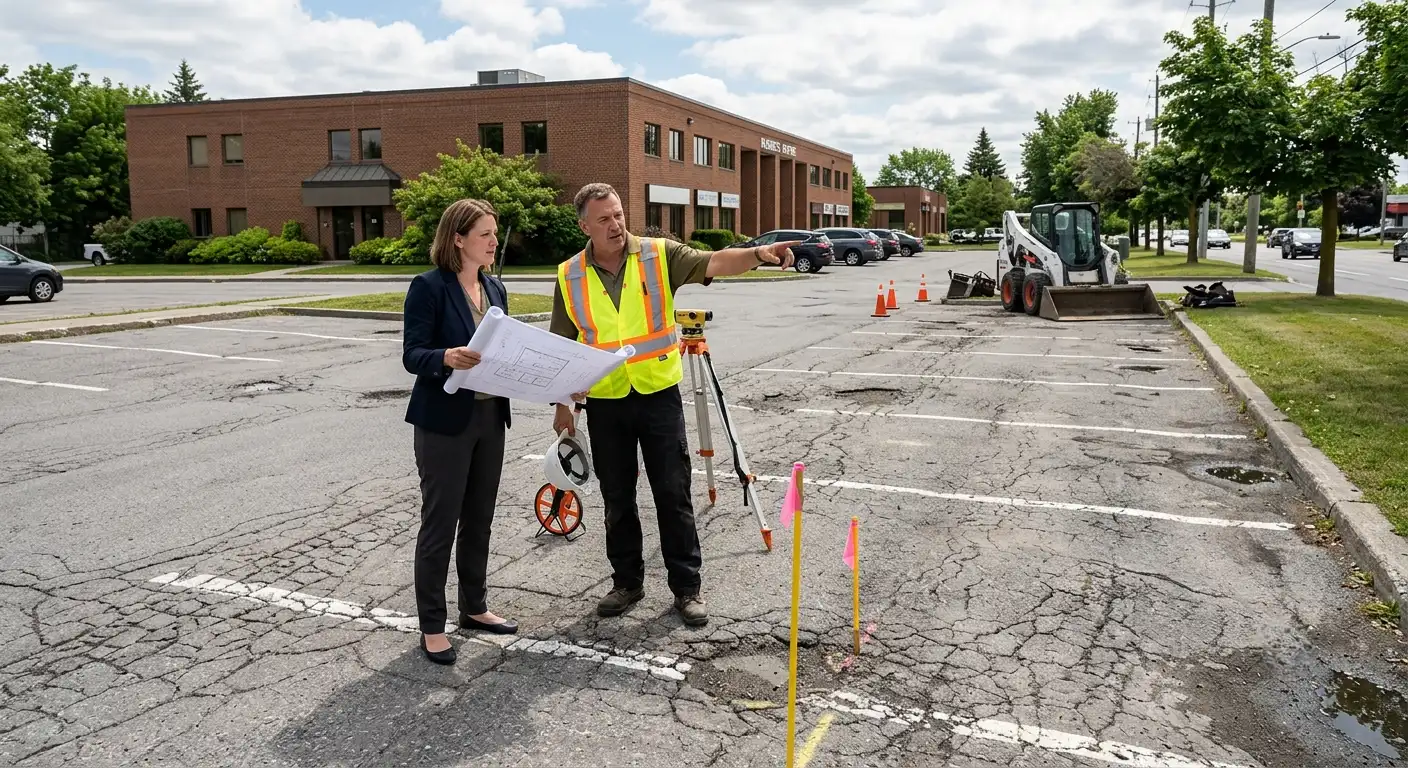
Parking lots are easy to ignore until they become a problem. They are also one of the largest surfaces a property owns, one of the first things visitors experience, and a genuine liability concern when they deteriorate. If a lot on your site is due for work, planning properly makes the difference between a surface that performs for years and one that needs attention again far too soon.
Know What Condition You Are Actually Dealing With
Before scoping anything, establish whether the problem is on the surface or underneath it. That distinction drives the entire budget.
Surface Level Issues
- Faded surface and worn line markings
- Shallow, isolated cracking
- Localised wear at entrances and turning points
Structural Issues
- Potholes that return after patching
- Areas that feel soft or visibly sink under load
- Interconnected cracking across large sections
- Standing water that never fully drains
Surface issues can often be addressed with resurfacing or targeted repair. Structural issues mean the base has failed, and no surface treatment will hold on a compromised foundation. The same decision framework applies at any scale, and our guide for choosing between repair and replacement with a driveway contractor ottawa walks through the diagnostic signs in detail.
Scope the Project Around Site Reality
Commercial work has constraints residential work does not.
Traffic and Access
Which entrances must stay open? Can work be phased by section? Are there loading areas or emergency routes that cannot be closed at all?
Timing
Overnight or weekend work costs more but avoids disrupting operations. Weigh that against the cost of lost access during business hours.
Load Requirements
A lot serving passenger vehicles has different requirements than one taking delivery trucks or waste collection. Surfaces built for the wrong load fail early at predictable points.
Drainage
Standing water is the most common cause of premature failure. If water pools now, that has to be corrected as part of the work, not deferred.
Getting these right at the planning stage is central to any commercial asphalt paving project, because the sequencing decisions made here determine both cost and disruption.
What a Complete Project Usually Involves
Most parking lot work includes more than the paved surface itself.
Site Preparation
Excavation where required, removal of unsuitable material, and correction of soft areas before anything is placed.
Base Construction
Granular base placed and compacted in layers to the depth the intended loading demands. This is the least visible and most consequential stage, and our explanation of why driveway paving ottawa results depend on the base applies directly to commercial surfaces.
Grading
Shaping the surface so water moves to the intended collection points rather than pooling in traffic areas.
Surfacing
Placement and compaction of asphalt to specified depth.
Edge and Perimeter Work
Curbs define traffic flow, protect landscaped areas, and channel drainage. Coordinated asphalt curbs work usually happens alongside surfacing rather than after it.
Pedestrian Elements
Walkways, crossings, and access routes need to meet accessibility and durability standards. Planning commercial sidewalk construction with the paving schedule avoids doing the same ground twice.
Where Concrete Elements Fit
Many commercial sites combine asphalt surfacing with concrete components: curbs, sidewalks, and pads. These are usually installed to different tolerances and on a different schedule than the asphalt itself.
Coordinating them matters. Sequencing errors between concrete and asphalt work create rework, extend closures, and produce joints that fail early. Carlsbad manages and coordinates concrete paving services for commercial and municipal clients, working with qualified partners while overseeing scheduling and site readiness so the elements come together cleanly.
Questions to Ask Any Contractor
What Base Depth Are You Specifying, and Why?
The answer should reference your soil conditions and expected loading. A single default number applied to every site is a warning sign.
How Will Drainage Be Addressed?
If water pools now, ask specifically how the new grading changes that.
How Will Work Be Phased?
You need a realistic plan for keeping the site operational, including which areas close when.
Who Manages Coordination?
On sites involving asphalt, concrete, and pedestrian elements, ask who is accountable for sequencing between them.
What Happens to Existing Material?
Removal, disposal, and site cleanliness should be defined rather than assumed.
The Bottom Line
Commercial paving rewards planning more than almost any other site work. Establish whether the problem is structural or cosmetic, scope around access and load reality, insist on proper drainage correction, and make sure someone is clearly accountable for coordinating the moving parts. Done properly, the surface disappears back into the background where it belongs. We work with property managers and developers across the region, including rockland paving projects and sites throughout the east end.
Are you ready to get your project started? Contact us for a free consultation and a site walkthrough.
