
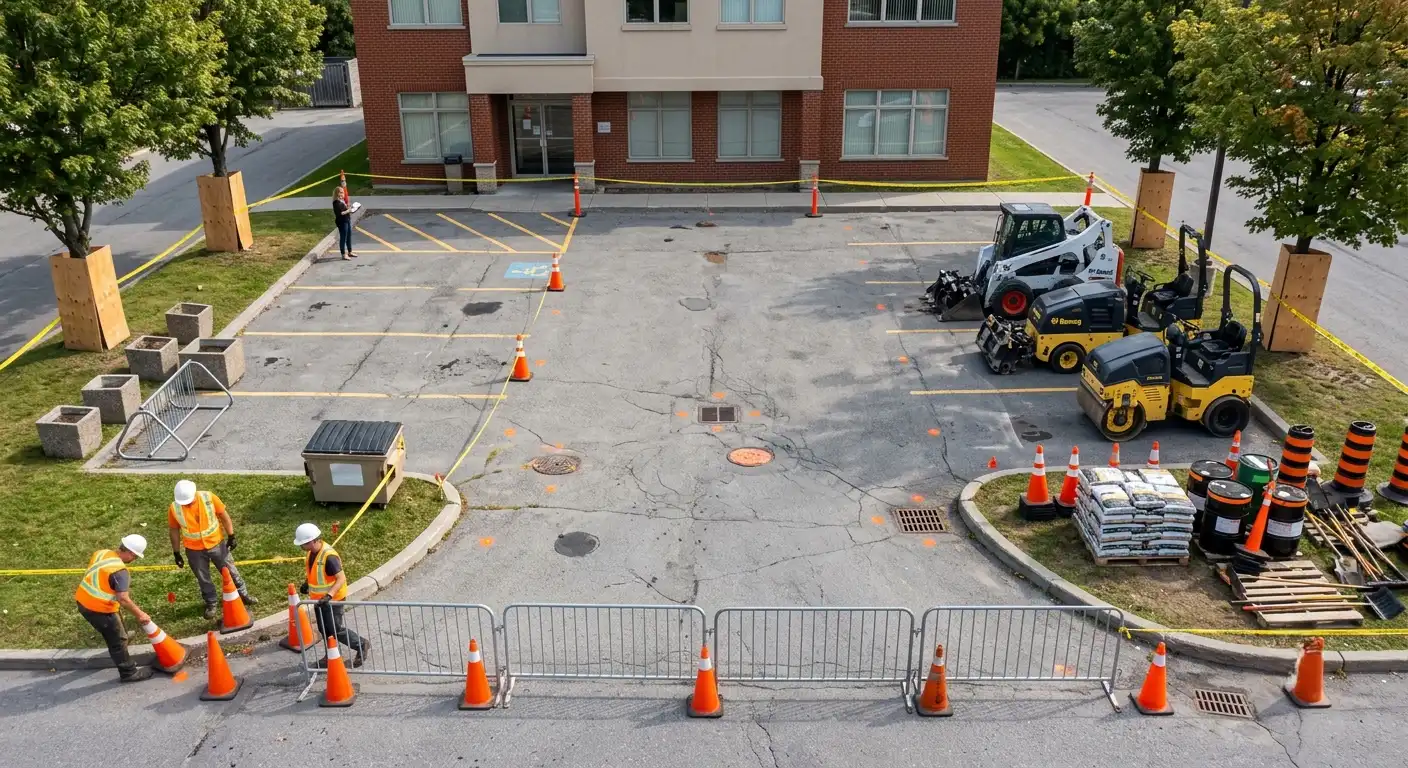
Booking a paving project can feel like handing over your property and hoping for the best. It does not need to. Asphalt installations follow a predictable sequence, and knowing what happens at each stage makes it far easier to plan around, ask useful questions, and recognise whether the work is being done properly.
Before Work Begins
The Site Assessment
Every worthwhile project starts with someone looking at the actual conditions. Soil type, existing drainage, slope, access for equipment, and how the surface will be used all affect what gets specified. A quote produced without this step is a guess.
The Quote and Scope
A clear scope should state excavation depth, base material and depth, surface thickness, grading approach, and what happens to removed material. Vague quotes create disagreements later.
Scheduling and Weather
Paving is weather dependent. Ground conditions and temperature both matter, so some flexibility in timing is normal, and a contractor who acknowledges that is being realistic rather than evasive.
What You Can Do to Prepare
A little preparation on your side keeps things moving.
Clear the Work Area
- Move vehicles well clear of the surface and access route
- Relocate portable items: planters, bins, furniture, sports equipment
- Trim branches that would obstruct trucks and equipment
Plan Around Access
- Arrange alternative parking for the duration
- Let household members know which routes will be unavailable
- Reschedule deliveries that fall inside the work window
Flag Anything Buried
- Irrigation lines, low voltage lighting, invisible fencing
- Septic components or drainage runs
- Anything else beneath the surface that crews cannot see
That last point matters more than people expect. Buried services are far cheaper to work around than to repair.
What Happens During the Work
Excavation
The existing surface and unsuitable ground material are removed to the required depth. This is the noisiest, most disruptive stage and usually the fastest.
Correcting the Ground
Soft spots, organic material, and unstable areas are addressed. Placing anything over unstable ground guarantees future settling.
Base Installation
Granular material is placed and compacted in layers. Compaction is what stops the surface settling unevenly later, and it is the step most often rushed on low bids. This is why our driveway paving ottawa work treats base construction as the core of the job rather than preparation for it, and why the driveway contractor ottawa you choose should be able to explain their base specification without hesitation.
Grading
The surface is shaped so water runs away from structures and off the surface. Grading is subtle work that determines whether the finished surface sheds water or traps it.
Surfacing
Asphalt is placed and compacted, or stone is laid and set, depending on the surface type. Stone work follows the same base logic but with additional attention to bedding, alignment, and edge restraint, as any interlock paving installation requires.
Finishing and Cleanup
Edges are addressed, surplus material removed, and the site left tidy. Ask in advance what cleanup includes.
After the Work Is Done
Curing and Early Use
A new surface needs time before heavy use. Avoid parking in the same spot repeatedly at first, keep sharp turns to a minimum while the surface is fresh, and stay off the edges, which are always the most vulnerable part.
Edge Support
Edges lack lateral support until soil or stone is backfilled against them. Keeping vehicles off the edge in the early weeks prevents cracking that is entirely avoidable.
Seasonal Expectations
Any outdoor surface responds to freeze-thaw movement. Well-built surfaces resist it, but no surface is entirely static, and minor seasonal change is not a defect.
Timing and Seasonal Considerations
When work happens affects how it goes.
Spring
Demand is highest and schedules fill early. Ground conditions can still be wet from thaw, which sometimes delays excavation. Booking well ahead matters more in spring than any other season.
Summer
The most reliable window. Warm, stable conditions suit both placement and compaction, and drying times are predictable. It is also the busiest period for most crews.
Early Autumn
Often the sweet spot. Temperatures remain workable, schedules loosen slightly after the summer rush, and the surface has time to settle before winter arrives.
Late Season
As temperatures drop, asphalt becomes harder to place and compact properly. There is a point each year past which the work is better deferred than rushed, and a contractor who tells you that is protecting the result rather than losing the job.
Signs the Work Was Done Right
- Water runs off cleanly rather than pooling anywhere
- Edges are firm, supported, and consistent
- The surface is even, without dips or high spots
- Transitions to garages, walkways, and the street sit flush
- Nothing feels soft or spongy underfoot
The same standards apply at any scale. Whether it is a single driveway or a full commercial asphalt paving project, the finished surface should shed water, sit level, and feel solid everywhere.
The Bottom Line
A paving project is disruptive for a short time and permanent afterwards, which is a good trade if the sequence is followed properly. Clear the site, flag what is buried, understand what each stage accomplishes, and give the finished surface a little care in its first weeks. We work throughout the region, from the city core to orleans paving projects and the surrounding communities.
Are you ready to get your project started? Contact us for a free quote and a clear walkthrough of what your project involves.
