
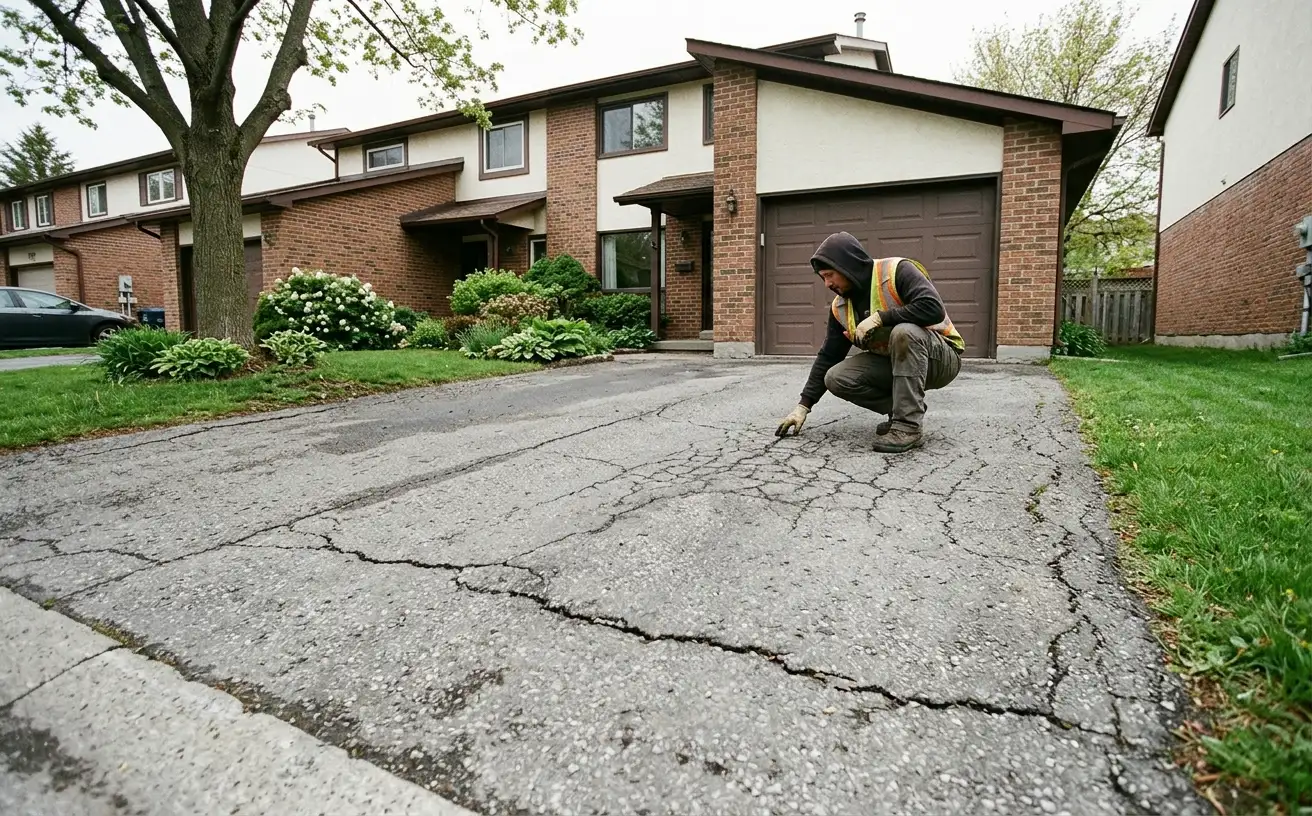
Every driveway cracks eventually. What matters is which kind of crack you are looking at, because different cracks mean very different things. Some are cosmetic and easily managed. Others are early warnings of a problem building underneath. Learning to read them tells you whether you are looking at simple maintenance or something that needs attention before winter makes it worse. Here is what each type is telling you.
Cracks Are a Language, Not Just Damage
A crack is the surface reporting on what is happening below and around it. The pattern, width, and location all carry information. Read together, they usually point to a cause, and the cause determines what to do about it.
The single most important distinction is whether a crack is surface-level or a symptom of base failure underneath. That difference separates a quick fix from a major repair, and it is the same distinction that drives every driveway paving ottawa decision about what a surface actually needs.
Hairline and Surface Cracks
Thin cracks, narrower than about a quarter inch, are the most common and usually the least serious.
What They Mean
Normal surface aging, minor temperature movement, and ordinary wear all produce fine cracks. On their own they are not alarming.
Why They Still Matter
Left open, they let water in, and water is what turns a hairline crack into a real problem over a freeze-thaw winter. Addressing them early through crack filling keeps water out before it can undermine anything. This is basic upkeep, and it is the cheapest stage at which to act.
Cracks Along the Edges
Edges are where many driveways fail first, because they lack lateral support.
What They Mean
Edge cracking usually signals that the sides of the driveway are unsupported, allowing the asphalt to break away or slip. Driving over the edge or parking too close to it accelerates the problem.
What Helps
Proper edge support, backfilling with stone or firm soil, addresses the cause. Where the damage is limited, this is a targeted repair rather than a full replacement, and reading it correctly is part of the same diagnostic thinking as choosing between driveway repair and replacement.
Alligator Cracking
Interconnected cracks that resemble reptile skin are the pattern to take seriously.
What They Mean
Alligator cracking signals structural fatigue. The base beneath that area has weakened or failed, and the surface is flexing under load without proper support. This is not a surface problem, and surface treatments will not fix it.
What It Usually Requires
Once the base has failed across an area, that section generally needs rebuilding from the base up. Patching the surface only buys a little time. The scale of the affected area determines whether this is a section repair or points toward broader driveway resurfacing ottawa or replacement.
Wide or Deepening Cracks
Cracks that keep widening, lengthening, or reopening after being filled are telling you the movement underneath has not stopped.
What They Mean
Ongoing base movement, drainage problems, or frost action are driving the cracking. The surface is responding to something that is still active below it.
What It Needs
The cause has to be found and corrected, usually drainage or base, before any surface repair will hold. Repeatedly filling a crack that keeps reopening is treating the symptom while the cause continues, a point our guide to asphalt repair ottawa decisions covers in detail.
Why Ottawa Makes All of This Worse
Every crack type is accelerated by our climate. Water enters the crack, freezes, expands, and pries it wider, dozens of times each winter. A crack ignored in autumn is often noticeably worse by spring.
This is why timing matters. Reading a crack correctly and acting before winter is far cheaper than dealing with what that same crack becomes after a season of freeze-thaw. The whole approach rests on a sound base to begin with, which is why quality residential paving ottawa work invests in what sits beneath the surface.
The Bottom Line
Not all cracks are equal. Hairline cracks want sealing before water gets in. Edge cracks want support. Alligator cracking signals base failure. Cracks that keep reopening point to an active cause that has to be corrected first. Reading them correctly turns guesswork into a clear decision. We help homeowners across the region, including kanata landscaping properties in the west and cumberland paving in the east.
Are you ready to get your project started? Contact us for a free assessment of what your driveway’s cracks are telling you.
