
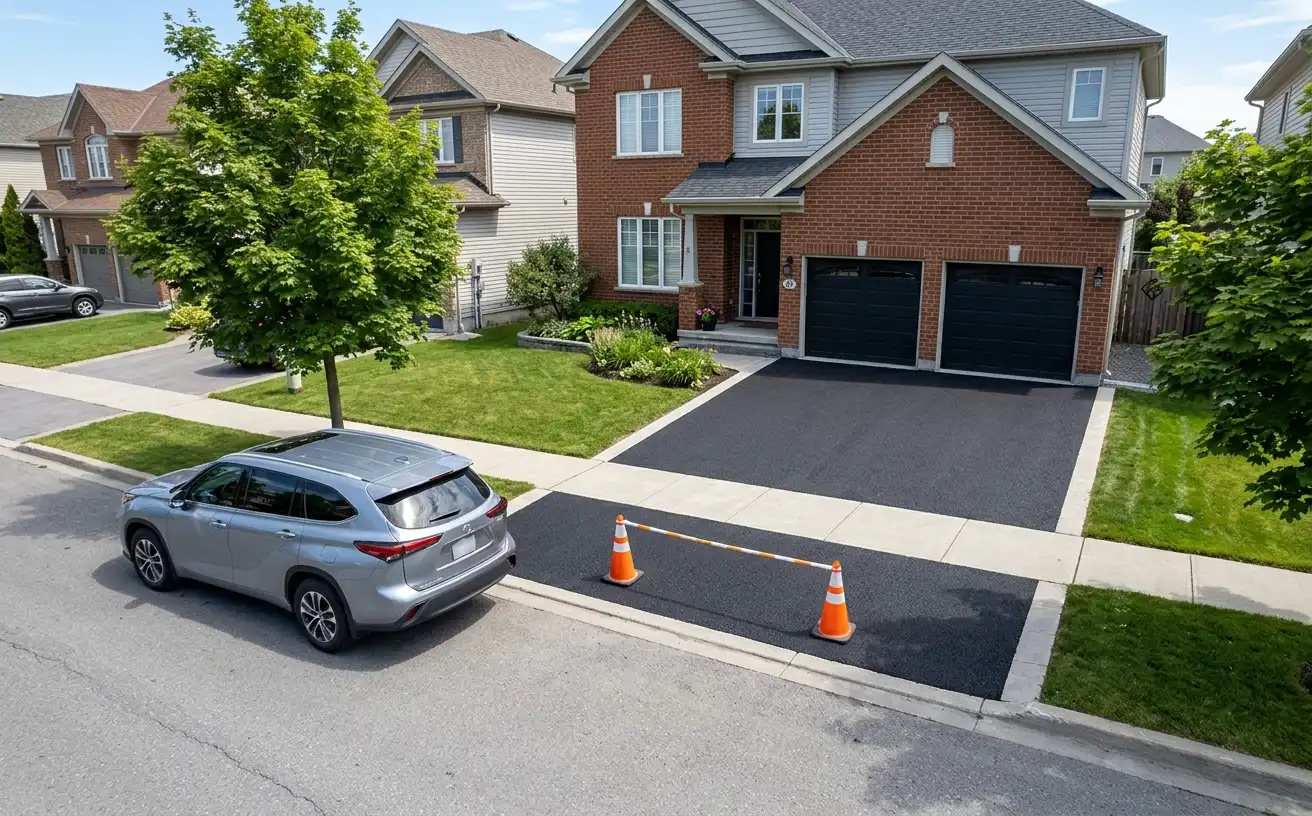
A freshly paved asphalt driveway may look ready for vehicles almost immediately, but it needs time to cool and become firm enough for use. Driving or parking too soon can leave tire marks, indentations, or other surface damage.
Many residential paving contractors recommend keeping vehicles off newly installed asphalt for approximately 48 to 72 hours, depending on the weather and installation conditions. This is general guidance, not a guaranteed reopening time. Always follow your paving contractor’s instructions, as your driveway may require a different waiting period.
Why You Need to Wait Before Driving
Hot-mix asphalt is installed at elevated temperatures so it can be spread and compacted properly.
Once the pavement is placed, it begins losing heat and becoming firmer. However, a driveway that looks finished may still be too warm or soft for vehicle traffic. The initial waiting period allows the asphalt to cool sufficiently for normal use.
For homeowners investing in asphalt driveway paving in Ottawa, following the contractor’s reopening instructions is an important part of protecting the finished surface.
Cooling vs. Curing: What’s the Difference?
Cooling and curing are often used interchangeably, but they describe different aspects of asphalt’s behaviour.
Cooling is the initial loss of heat after installation. It allows hot-mix asphalt to become firm enough for vehicle use.
Curing refers to longer-term changes in the asphalt mixture and binder. These changes can continue after the driveway has opened to traffic, although the timing varies by material and conditions.
A driveway does not need to complete every long-term material change before it can be used. The more important question is whether it has cooled sufficiently and whether the contractor has confirmed it is ready for the intended traffic.
Can You Walk on New Asphalt Before Driving on It?
A properly cooled surface may be suitable for careful foot traffic before vehicle traffic is permitted. However, the appropriate waiting period depends on installation conditions.
Even when walking is allowed, avoid placing concentrated loads on the surface or dragging heavy objects across it while the pavement is still warm. If access to your home depends on crossing the new driveway, discuss temporary pedestrian access with your contractor before installation. This is particularly useful when a driveway connects directly to interlock walkways or entrances.
Why Parking Can Cause More Damage Than Driving
Driving slowly across a driveway and leaving a vehicle parked in one position place different demands on the asphalt. A moving vehicle applies pressure across different sections of the pavement. A parked vehicle concentrates its weight beneath the tires for an extended period.
During hot weather or the early period after installation, concentrated loads may leave impressions in the surface. Once your contractor permits vehicle access, consider varying your parking position when practical and avoiding prolonged stationary loads if the pavement remains unusually soft. Heavily loaded vehicles and trailers may require additional precautions.
Does Hot Weather Change the Waiting Period?
Yes. High temperatures can influence how quickly the asphalt cools and how firm it remains. A newly paved driveway exposed to strong summer sunlight may remain relatively soft for longer than one installed under cooler conditions.
Even after the initial reopening period, asphalt can become more susceptible to tire marks and impressions during very hot weather. This does not automatically mean the pavement was installed incorrectly. Follow the installer’s guidance and avoid unnecessary concentrated pressure when the surface is especially warm.
What About Rain or Cooler Temperatures?
Cooler weather can help asphalt lose heat more quickly, but air temperature is only one consideration. Pavement thickness, ground conditions, sunlight, and the material used all influence cooling.
Rain after proper installation and cooling is not necessarily harmful. However, rainfall during paving or before the work is complete can interfere with placement and compaction. Your contractor should determine the appropriate reopening time based on the actual installation.
How to Avoid Tire Marks on Fresh Asphalt
Once vehicle traffic is permitted, a few precautions can help reduce marking.
- Avoid turning the steering wheel while the vehicle is stationary.
- Drive slowly and make gradual turns.
- Avoid sudden braking or acceleration.
- Do not leave heavy equipment or trailers on the surface without checking suitability.
- Be especially careful during periods of intense heat.
Sharp steering movements can create friction between tires and pavement, leaving scuff marks when the asphalt is relatively soft. These precautions are particularly useful during the initial period of driveway use.
What If Your New Driveway Develops Indentations?
Light surface markings and deeper pavement depressions are not necessarily the same problem. Minor tire scuffs may be superficial. Deep or persistent impressions, unusual softness, or surface movement may require further assessment.
If you notice significant deformation, contact your paving contractor rather than attempting to correct it yourself. A professional can determine whether the marks are cosmetic or whether additional work is necessary.
For general guidance on recognizing structural pavement problems, our article on driveway repair, resurfacing, and replacement explains the signs that deserve attention.
Follow Your Contractor’s Reopening Instructions
The safest time to drive on new asphalt depends on the conditions of the installation. General waiting periods can help with planning, but they should never replace instructions specific to your driveway. Before the work begins, ask when walking, driving, and regular parking will be permitted so you can arrange alternative access.
Carlsbad Paving provides residential paving services in Ottawa, including asphalt driveway installation, resurfacing, and repairs. If you’re planning a project, our guide to preparing your property for paving explains what to expect from scheduling through completion.
Ready to plan your new driveway? Contact Carlsbad Paving for a free consultation, or call 613 822-0225 to discuss your project.
