
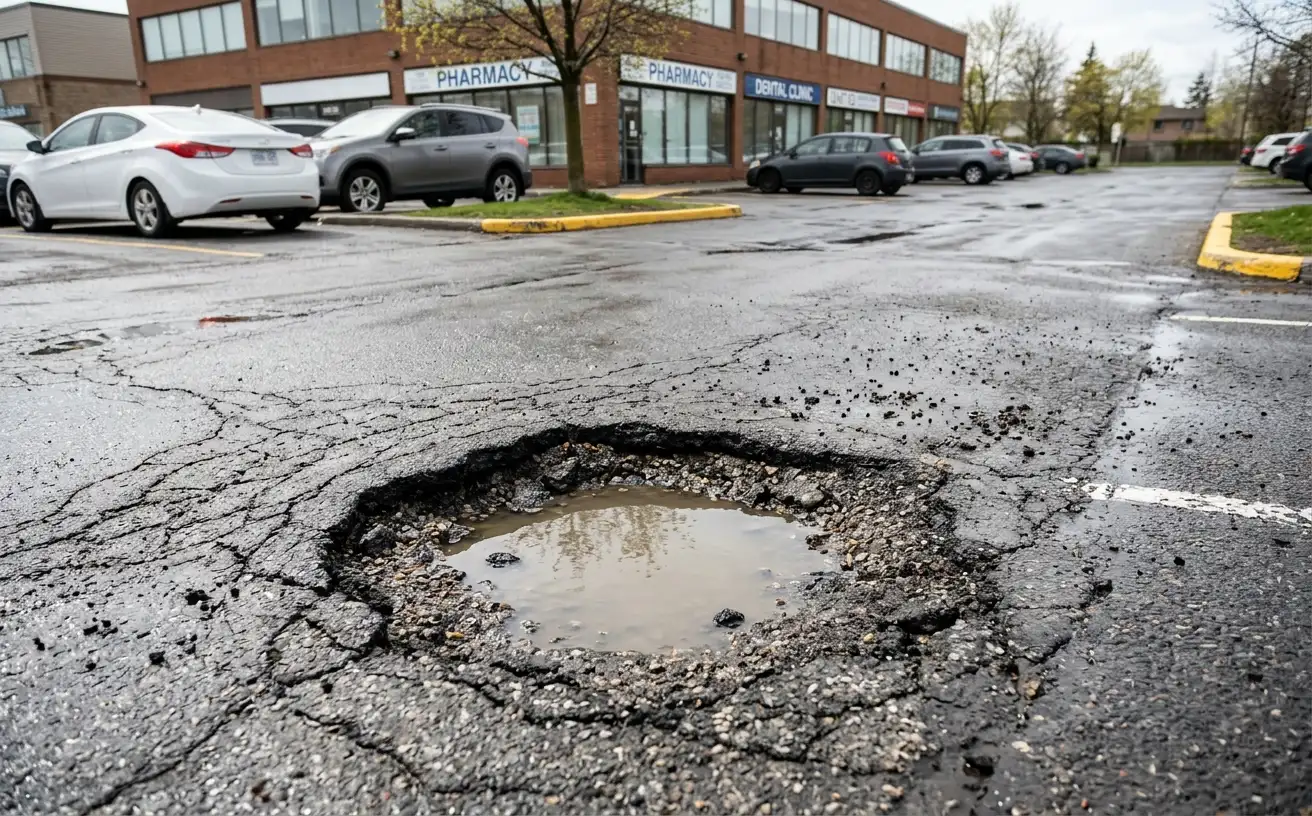
Potholes in commercial parking lots can create problems for property owners, drivers, and pedestrians. Beyond making the surface uncomfortable to use, they can collect water, damage vehicles, and create potential safety concerns.
Most potholes develop when weakened pavement is subjected to repeated traffic. Water infiltration, freeze-thaw cycles, heavy vehicle loads, and deterioration beneath the asphalt can all contribute. Understanding these causes helps property managers decide whether a localized repair is sufficient or a more extensive pavement assessment is necessary.
How Does a Pothole Form?
A pothole rarely develops without warning. The process often begins with small cracks, weakened pavement, or an area that no longer has adequate support underneath.
Moisture enters vulnerable sections of the surface, and repeated vehicle traffic places pressure on the surrounding asphalt. As the material deteriorates, pieces loosen and break away, creating a depression. Once a pothole forms, continued traffic can enlarge it, especially when the surrounding pavement remains weak.
Why Water Is a Major Cause
Water infiltration is one of the most common contributors to pothole development. When rainwater or melting snow enters cracks, it can reach the supporting layers beneath the asphalt. If the material underneath becomes saturated or unstable, the pavement may flex under traffic and begin to break apart.
Standing water can also accelerate damage where the asphalt is already deteriorating. For commercial properties, recurring puddles near potholes are worth investigating because they may indicate an unresolved drainage concern. Carlsbad Paving’s commercial asphalt paving services include site-specific preparation and grading considerations intended to support long-term pavement performance.
Ottawa’s Freeze-Thaw Cycles Make Damage Worse
Ottawa’s winters create particularly demanding conditions for damaged pavement. Water entering cracks may freeze and expand, placing additional stress on weakened asphalt.
As temperatures rise, melting ice leaves moisture behind. Repeated freezing and thawing can contribute to further deterioration, especially when vehicles continue travelling over the affected areas. This helps explain why potholes often become more noticeable during late winter and spring. The damage may appear sudden, even though the underlying deterioration has been developing for some time.
Why Potholes Develop Near Entrances and Loading Areas
Not all parts of a parking lot experience the same traffic demands. Entrances, exits, turning areas, and loading zones often receive repeated concentrated loads. Vehicles accelerate, brake, and turn in these locations, placing different stresses on the pavement than straight-through driving. Commercial trucks, delivery vehicles, and waste collection equipment can increase those demands. Areas designed for lighter traffic may deteriorate more quickly if they regularly support heavier vehicles than anticipated. This is why commercial pavement needs to reflect how the property is actually used.
Can Weak Base Materials Cause Recurring Potholes?
Yes. If the supporting layers beneath the asphalt are unstable, the pavement may continue deteriorating even after the visible pothole is filled. Repeated potholes in the same location may indicate settlement, moisture-related weakening, or insufficient support.
A surface repair may temporarily restore the appearance and usability of the area, but it cannot reliably correct a failed foundation. The appropriate solution depends on the condition of the surrounding pavement and what is happening underneath. This distinction matters when property managers are deciding between targeted repairs and more substantial pavement work.
Why Do Some Potholes Return After Repair?
A pothole can return when the original contributing conditions remain. For example, if water continues entering the repair area or the underlying material is unstable, the pavement may begin breaking down again.
Repeated failure does not automatically mean every repair was improperly completed. It may indicate that a localized patch is no longer an adequate solution for the condition of the pavement. A professional assessment can help establish whether the problem is confined to the surface or extends into the supporting layers.
When Is Pothole Repair Enough?
Localized repairs may be appropriate when damage is limited and the surrounding pavement remains stable. More extensive intervention may be necessary when a parking lot has widespread cracking, repeated potholes, visible settlement, or substantial deterioration across multiple areas. Property managers should also consider whether the damage affects important access routes or creates hazards for vehicles and pedestrians.
For sites experiencing broader deterioration, our guide to planning a commercial parking lot project explains how to assess condition, drainage, traffic demands, and project scope. Carlsbad Paving’s broader commercial paving services support parking lots, access routes, and other high-use surfaces across Ottawa.
What Should Property Managers Watch For?
Regular visual checks can help identify problems before they become widespread.
Pay particular attention to:
- Cracks developing around existing patches
- Potholes returning in the same location
- Standing water near damaged pavement
- Settlement in frequently used traffic lanes
- Deterioration around loading and turning areas
- Loose asphalt or expanding damaged sections
These signs do not all require complete reconstruction, but they can indicate that the pavement needs professional evaluation.
Address the Cause, Not Just the Pothole
Commercial parking lot potholes often result from a combination of moisture, traffic loading, seasonal movement, and weakened pavement support. Understanding the cause helps property managers decide whether a targeted repair is appropriate or whether the site requires more extensive paving work. Carlsbad Paving has served Ottawa and surrounding communities since 1959, providing commercial asphalt paving, resurfacing, and surface management services.
Concerned about recurring potholes or deteriorating commercial pavement? Contact Carlsbad Paving for a site consultation, or call 613 822-0225 to discuss your commercial paving project.
