
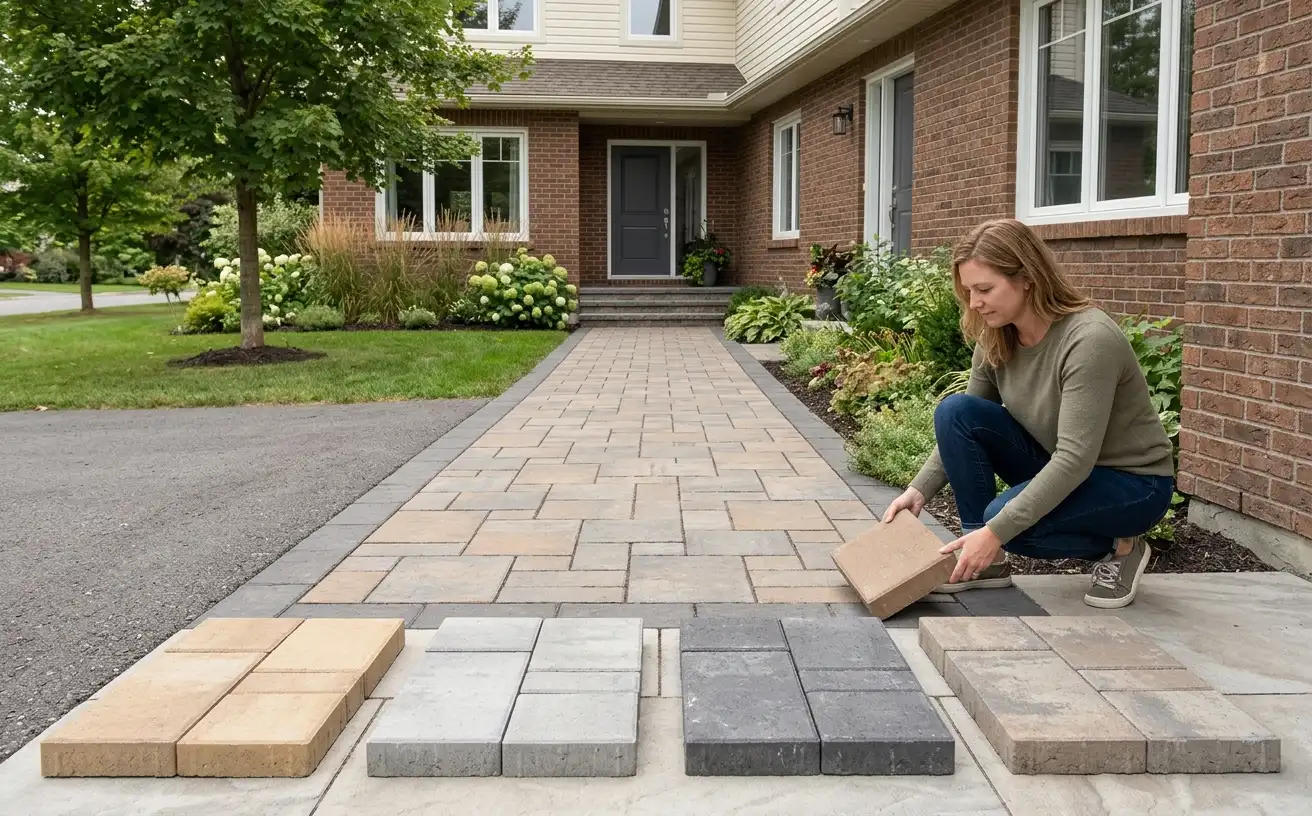
The colour of your interlock pavers can make a noticeable difference to your home’s exterior. Whether you’re planning a patio, front walkway, or decorative driveway, the right shade helps connect your outdoor surfaces with the surrounding brick, siding, stone, and landscaping.
But choosing a colour from a small sample isn’t always straightforward. Lighting, undertones, surrounding materials, and the size of the finished area can all affect how pavers appear. Here’s what Ottawa homeowners should consider before making a decision.
Start With Your Home’s Exterior
Your home’s existing materials are the best starting point for selecting interlock colours. Rather than trying to match every exterior finish exactly, look for colours that complement the overall appearance.
For Red or Brown Brick Homes
Red and brown brick often contain warm undertones that pair well with beige, taupe, sandstone, and certain brown-grey paver blends.
Neutral greys can also work, particularly when the home’s trim or roofing includes similar shades. The goal is to create a balanced contrast rather than introduce another colour that competes with the brick.
For White, Grey, or Modern Exteriors
Homes with white siding, charcoal accents, or contemporary finishes often suit grey and neutral-toned interlock. Light grey can create an open, understated appearance, while charcoal adds stronger contrast. However, very dark paving across a large area may create a heavier visual effect than expected, particularly beside a light-coloured home.
For Natural Stone Exteriors
If your home features natural stone, pay attention to the undertones already present. A warm beige stone facade may look more cohesive with similarly warm pavers, while cooler grey stone often pairs well with neutral or charcoal blends.
Carlsbad Paving offers interlock paving in Ottawa for driveways, patios, walkways, steps, and landings, allowing homeowners to coordinate their outdoor surfaces with the surrounding property.
Pay Attention to Warm and Cool Undertones
Two pavers may both be described as grey but look noticeably different when placed beside your home.
Some greys contain blue or cooler undertones. Others lean toward beige or brown, sometimes described as greige. The same distinction applies to beige and brown pavers. A useful approach is to compare samples directly against the home’s brick, siding, or existing stonework. You don’t need every material to have the same undertone, but understanding the differences can help avoid combinations that look unintentionally mismatched.
How Sunlight Changes Paver Colours
Natural lighting can dramatically change the appearance of interlock. A medium-grey paver may look much lighter in direct sunlight and considerably darker in a shaded backyard.
Wet pavers can also appear deeper in colour than dry ones. If possible, examine representative samples outdoors during different lighting conditions rather than relying exclusively on showroom displays or photographs.
For patios that receive strong afternoon sunlight, consider whether a very dark surface will become uncomfortably warm during summer. Lighter colours generally reflect more sunlight, although actual surface temperatures depend on the specific material and finish.
Solid Colours vs. Blended Pavers
Solid-colour pavers provide a consistent appearance and often suit clean, modern designs. Blended pavers combine several related shades, creating a more varied surface. A blend may work particularly well where the home’s exterior contains multiple colours or natural materials. It can also make some everyday surface marks less noticeable, although performance depends on the particular colours and finish. When choosing a blended product, look at several pavers together. One sample may not represent the full colour variation across a finished patio or walkway.
Should Your Walkway Match Your Driveway?
Not necessarily. If your property has an asphalt driveway, an interlock walkway in a contrasting colour can define the route to the front entrance. Grey or charcoal pavers may complement black asphalt, while warmer shades can connect the entrance to brickwork or garden features. Where several outdoor areas meet, consider how the materials transition between them. Coordinating driveway paving with interlock selections can help create a more intentional overall appearance. For larger improvements, residential landscaping planning can help connect paved areas with surrounding garden spaces.
Use Borders Without Adding Too Many Colours
Borders are a useful way to define an interlock surface without introducing an entirely different material. A charcoal border around lighter pavers can create a clear outline. A more subtle variation can provide definition without becoming the main visual feature.
Try to limit the number of competing colours, especially if your home already contains several different exterior materials. Borders can also connect interlock with nearby hardscaping features, including stone steps, garden walls, and edging.
If your property features armour stone landscaping, choosing complementary tones can help the manufactured pavers sit comfortably alongside the natural stone.
Consider How the Colour Will Age
Outdoor pavers are exposed to sunlight, rainfall, dirt, and seasonal weather changes. Some colours make dust, mineral deposits, or stains more noticeable than others. Very light surfaces may show darker stains, while dark surfaces can make pale residue more visible. Ask about the selected product’s colour consistency, surface texture, and recommended maintenance before making your final choice. The best colour is one you’ll continue to enjoy as the surface weathers and becomes part of the surrounding landscape.
See Samples Before Making Your Decision
Before committing to a colour, compare samples with the materials already on your property. Look at them in sunlight and shade, consider how they appear beside brick or siding, and examine several pieces if you’re choosing a blended product.
It’s also worth considering the finished installation’s scale. A colour that looks subtle on one small stone may have a stronger effect across an entire driveway or patio. Our guide to interlock patios and walkways covers other planning decisions, including layout, patterns, and finishing details.
Choose Interlock Colours That Complement Your Home
The right interlock colour should work with your home’s exterior, the surrounding landscape, and the amount of light the area receives. Taking time to compare samples and understand undertones can help you choose a surface that looks balanced rather than disconnected from the rest of your property. Carlsbad Paving has served Ottawa and surrounding communities since 1959, providing in-house interlock installation and other residential outdoor surface services.
Planning an interlock patio, walkway, or driveway? Contact Carlsbad Paving for a free consultation, or call 613 822-0225 to discuss your project.
