
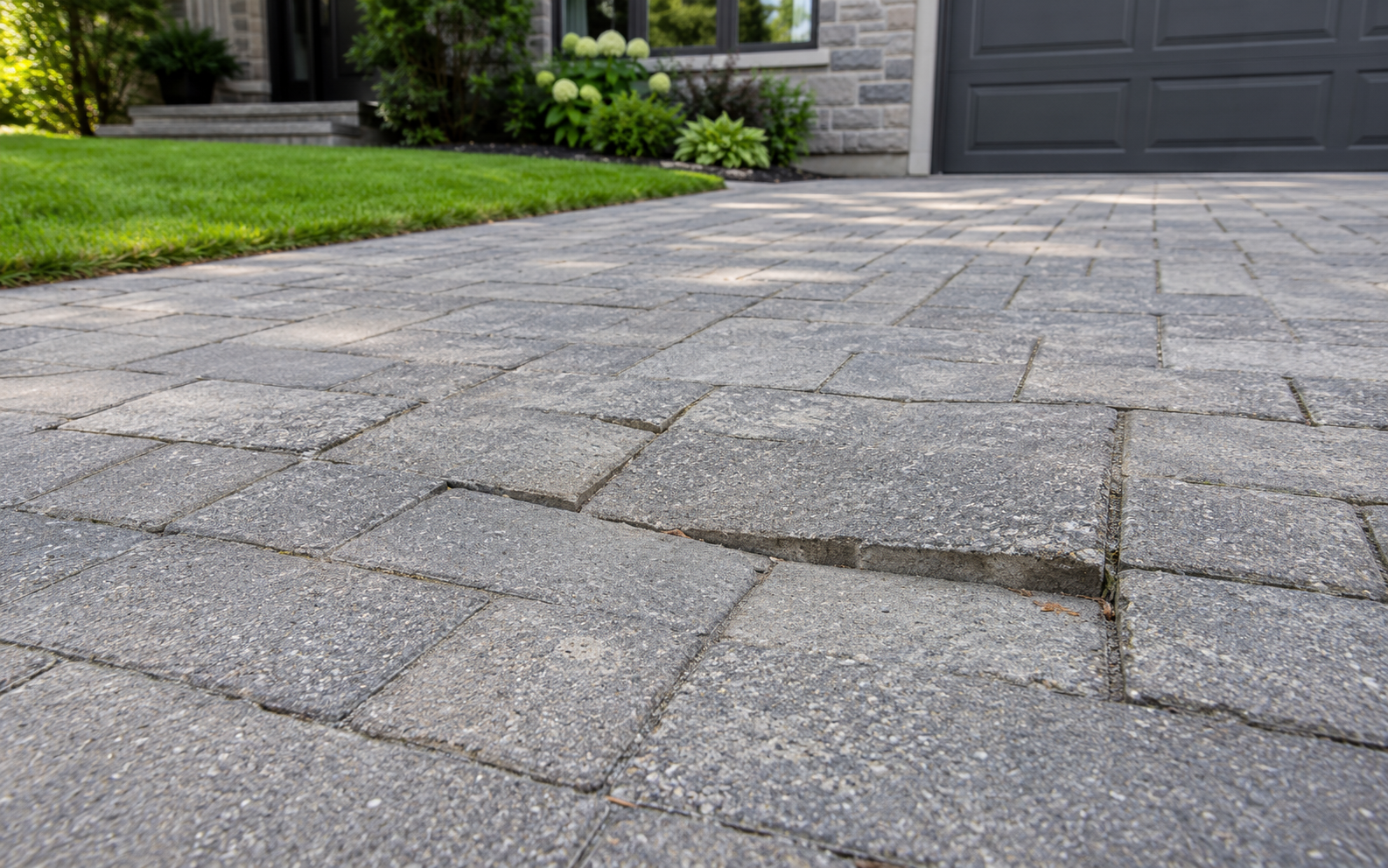
A localized reset may be suitable for a small uneven interlock area when the surrounding pavement is serviceable and the cause can be corrected within that area. Repeated settlement, a wider depression or movement affecting adjoining surfaces calls for a broader assessment of the supporting layers, edges and drainage. The size of the visible dip alone cannot tell you whether to reset the pavers or rebuild beneath them.
For homeowners considering interlock driveway repair in Orléans, Metcalfe or elsewhere around Ottawa, useful preparation starts with observations rather than a diagnosis. Note where the surface has changed, when you first noticed it and what happens after rain. Those details help explain what needs attention. Carlsbad Paving offers interlock installation; ask whether a repair-only request falls within the work the team can undertake before arranging a visit.
Describe the Movement Before Choosing a Repair
“Uneven” can describe several different conditions. A single paver sitting above its neighbours is different from a broad depression across a parking space. Movement along the outside edge raises different questions from a low area beside the garage.
| What you notice | What to record | What the assessment should investigate |
|---|---|---|
| A small group of low pavers | Location, approximate area and whether water collects | Whether the movement is localized or extends into the supporting layers |
| Widening joints near the lawn | Which edge is moving and whether units are tilting | The condition and suitability of the edge restraint |
| A depression following a wheel path | Vehicle use and whether the depression is changing | Support beneath the trafficked area |
| An uneven connection to another surface | Which side is higher and any nearby pooling | The relationship between adjoining surfaces and drainage |
These observations help frame the visit. They do not establish the cause by themselves. Photographs can show the pattern, but they cannot reveal the full condition of a concealed base.
When a Localized Reset May Be Worth Considering
A small affected area may be a candidate for lifting and resetting when the surrounding pavement remains serviceable and the cause can be addressed within that area. Whether existing pavers can be reused depends on their condition and the proposed work.
A useful repair proposal identifies the affected area, the condition of the units to be reused, the layers to be corrected and the intended finished levels. Ask what will be checked after the units are lifted. The scope should explain how the supporting layers, finished levels, joints and edges will be dealt with. Simply returning the top surface to the desired height is not a complete explanation of the repair.
Appearance also matters. Reused pavers may blend more naturally with the existing driveway than a visibly different replacement product. If new units are needed, compare size, texture and colour before committing. Our guide to interlock paver colours explains why samples should be considered beside the existing property.
When the Assessment Needs to Go Deeper
Repeated movement in the same place, deterioration across a larger area or changes that affect adjoining surfaces call for a broader investigation. A patch that has been reset before is particularly useful evidence: tell the contractor when the previous work happened and how long it remained level.
The Supporting Layers
The pavers are the visible part of the pavement. The materials beneath them also influence how the surface performs. If the assessment identifies a problem in those layers, correcting the visible units alone may not resolve it. Our article on driveway base preparation explains the importance of that foundation.
Water and Nearby Changes
Point out downspouts, irrigation, recurring puddles and recent work beside the driveway. Has a planting bed been altered? Has runoff started using a different route? Include these details even if you are unsure whether they are connected. Where the issue involves surrounding grades or garden areas, the discussion may need to include landscape design.
The Outside Edge
The perimeter needs to keep the paving units contained. An assessment should consider movement at that edge as well as the pavers in the centre. A decorative border and a suitable structural restraint are not necessarily the same thing.
A Useful Example: The Same Dip Returns
Imagine a driveway with a low patch beside a downspout. The area was reset, looked level for a while and then settled again. The useful question is not simply whether the same pavers can be lifted a second time. It is what was changed below them and whether water still reaches the area in the same way.
Bring photographs from before and after the previous repair if you have them. An estimate for another reset should explain what the new assessment has identified and how the proposed scope differs. This example illustrates a question to investigate, not proof that the downspout caused the settlement.
Keep Interlock and Asphalt Decisions Separate
Some driveways combine interlock borders or parking strips with asphalt. If both surfaces are deteriorating, ask which work belongs to each surface and how their connection will be managed. The options described in our asphalt repair guide should not be applied automatically to modular pavers.
Coordinating any necessary driveway paving with the interlock assessment can help avoid treating the join as an afterthought. A wider property project can also be discussed within Carlsbad Paving’s residential services.
Prepare for a Clear Scope Discussion
Share the approximate affected area, photographs, the history of previous work and the way vehicles use the driveway. Ask which pavers may be reused, what happens below the surface, what surrounding work is included and what remains uncertain until the area is opened.
Carlsbad Paving provides in-house interlock installation and serves communities including Orléans and Metcalfe. Describe the condition of your driveway so the team can discuss whether the proposed work fits its services.
Concerned about uneven interlock? Contact Carlsbad Paving, or call 613-822-0225 to describe your driveway and confirm whether the team can help with the proposed work.